
A Deep Dive into Academic Coaching
/by Melissa Starrett and Lisa Delfino
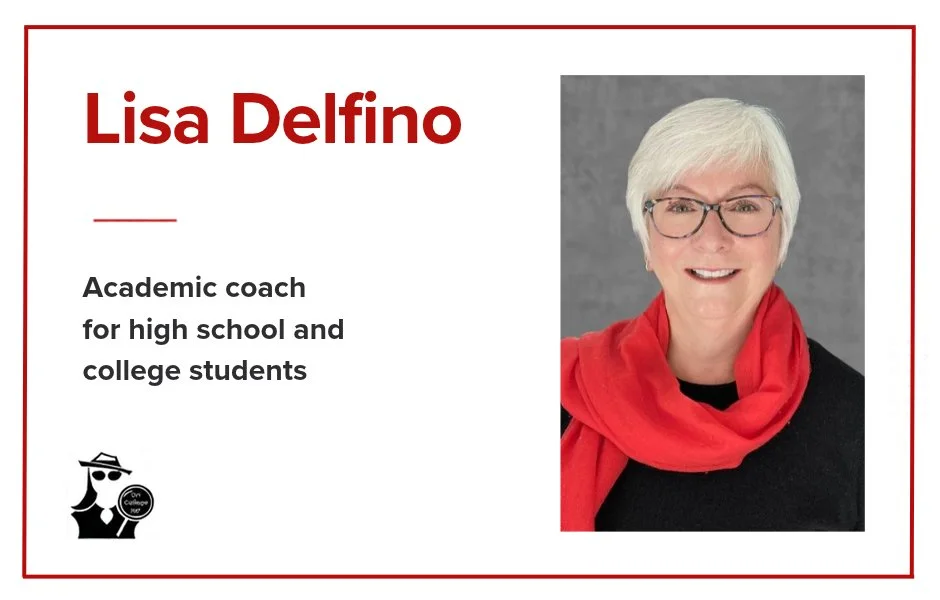
Lisa Delfino, academic coach
It’s no secret that College Spy consultants work with students and their families to navigate the college admissions process in various ways, including small group coaching, individual assistance, boot camps and workshops. However, we have a lesser-known, but equally important, member of our team, Lisa Delfino.
Lisa is an educator and academic coach who specializes in helping high school and college students with learning differences. I had an opportunity to interview Lisa and learn more about her work and what she offers to students and families.
What is an academic coach and what do you do?
Academic coaching is a process in which a learning expert helps a student master strategies for effective learning. At The College Spy, academic coaching is personalized to meet the individual needs of each student.
What I do:
Review reports from other professionals (neuropsychological reports, IEPs and 504 plans) about each student
Ask students deep questions to determine strengths and weaknesses
Meet with students weekly to teach study strategies
Assist students with planning for tests and large assignments
Educate students on how learning processes work in the human brain
Empower students to track their habits and own their learning
Teach students to understand their learning profile and explain why they need accommodations
Guide students to successful self- advocacy
The ultimate goal of academic coaching is for the coach to become unnecessary. Once students understand how they learn and act on this information, they no longer need someone like me.
What type of students benefit the most from coaching services?
Any student who wants to become a more efficient and effective learner is a good fit for coaching. The student must believe they can learn and be open to trying new things.
Coaching can be especially valuable at two points during the semester:
At the beginning of a semester: I help students establish organizational systems, plan for upcoming assignments and develop strategies for successful learning. We work together to identify what works best for them and build habits that support academic success.
Mid-semester: Coaching helps students regain their footing, prioritize immediate academic needs and develop a plan for moving forward. We focus on managing current coursework, improving performance and identifying strategies that will help them maintain strong grades throughout the semester.
The key is helping students develop skills and strategies they can continue to use independently.
How does academic coaching differ when working with college students versus high school students?
High school students are not as self-aware as college students. When coaching them, more guidance is required to assist them with learning how to plan and organize themselves and their thinking. High school students often have a lot done for them, either by teachers or parents. Time is spent guiding them to advocate for themselves and take control of their learning.
College students who work with me are usually in the early years of college. We meet once a week or twice a month to review their time management and plan how to study for classes. Most college students have a day when classes end early or start late, and we use this time to meet. The college students I see are “capable students”. They usually know how to study, but need to be reminded of the strategies that worked for them in high school. In addition, I assist college students with connecting to services on campus that can help them be successful.
What are some common challenges college students face?
Time management. College students often have large blocks of unstructured time and may not know how to use that time effectively
Ineffective study techniques. Most students do not understand that reading over the material before a test is not enough “studying” to do well.
College material is denser than high school material. Wading through information and being able to use it can be difficult. Many students get frustrated and give up.
Not using accommodations. Many college students do not seek accommodations or do not use them if they have them.
Do you find that college students tend to need more support in certain areas?
College students often need academic and social support. If they see me once a week, they can ask for help in a natural way.
Transitioning to college brings new challenges with time management as students take on greater responsibility for managing their own schedules, deadlines and academic workload.
You support students in various ways. Can you speak specifically to how you help students with the following skills/challenges?
Executive functioning skills:
Everything I do assists in shaping a student's EF skills!
Transition to college life:
I get a window into how life is for each student. I can tell if they are tired, eating well, clean, etc. We talk about staying healthy and reducing stress. Students tell me things they don’t easily tell their parents. We problem solve where to get help when they need it.
Academic support:
In addition to the support I give them, I encourage students to meet with professors during office hours, to make appointments with tutoring centers and to seek out the disability services office. When they are struggling with a task or specific class, we often dive into why the course is difficult and how they can get help.
Anything else?
Consider this continuum of support:
Tools (devices, ideas, materials, etc)
Routine (set of actions to accomplish goals)
Team (Identifying who can help and advocate with them)
Self-Care, Self-Talk, Self-Regulation (Sleep, food, exercise, fun, calming actions, monitoring progress, finding and connecting with purpose, etc.)
What are some signs that a college student may need additional academic support?
If they sound sad or angry and won’t tell you why, you should probably investigate what is going on. Being away from home can be too much for some students. Listen to them without giving solutions. Instead, ask them how they can help themselves, and seek help for them as needed.
What advice would you give parents who are concerned that their college student is struggling?
My best piece of advice is don’t wait. Once midterms are over, the semester could be lost if your student doesn't have help.
Asking your child to give you acceess to their grades will give you a window into their life. If their grades are heading toward academic probation, help them find folks at their school who can help such as advisors, library support, tutoring centers and office hours with professors.
Sometimes the best thing a parent can do is hire an outside coach to help their student and triage the situation.
If you are concerned about your student’s health, reach out to the Residential Director of your student’s dorm or the college’s Public Safety Department. It is not uncommon for schools to do wellness checks.
How can parents support their child in developing independence, time-management skills, and accountability in college?
Start before they go to college! While your student is in high school, give them enough independence to understand how schedules work and how to use their free time effectively. If grades are poor, make sure they meet with teachers to work out a way to bring their grades up.
Make sure they can do the simple things:
Do their laundry
Make a simple meal
Manage a bank account
Keep a job for several months
Drive or use public transportation
More information about Academic Coaching for high school students can be found here.
More information about Academic Coaching for college students can be found here.
If you would like to schedule a meeting to discuss whether academic coaching is right for your student, email michelle@thecollegespy.com.
Double-click to edit...