

Back to School: Helping Your Neurodivergent Student Start the Year Strong
/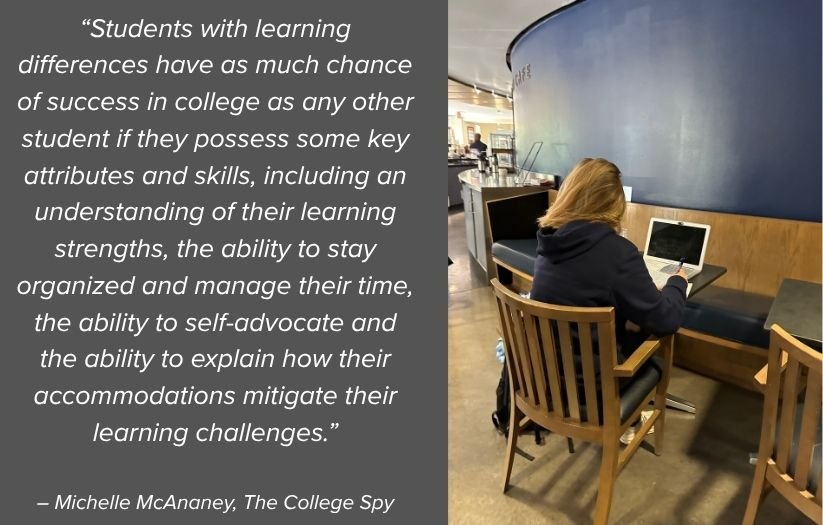
Quote and student studying
Saying goodbye to summer is never easy. A new school year means new teachers, more homework and a harder curriculum. Some students, including students with learning differences, look forward to school and thrive in an academic environment. Most, however, wish summer could last forever.
For many neurodivergent students, summer is a time to pursue activities and experiences where they can shine. Whether it is camp, a sport, a job or a project of their own choosing, the playing field is often leveled outside of the academic environment, giving students opportunities to build skills and feel confident in their abilities.
At The College Spy, we see our neurodivergent students respond to the start of school in one of two ways. Some feel anxious about returning to an academically or socially challenging environment. Others feel overly confident after a summer filled with activities where they succeeded.
Collectively, our team has more than 50 years of experience supporting neurodivergent students. Lisa Delfino was a high school special education teacher before becoming The College Spy's Academic Coach, and Michelle McAnaney spent more than 15 years working as a high school counselor. Here are our best tips for making the transition back to school a little smoother.
Debrief Last Year
Before jumping into a new school year, take some time to look back at the last one with your student. Talk about both the successes and the challenges. What worked well? What was frustrating? What strategies helped? What would your student like to do differently this year?
Try to make this a conversation rather than a critique. The goal is to help your student think about what they learned from last year and use that information to make a plan for the year ahead.
If last year was particularly difficult, dig a little deeper. Why was school hard? Was the material too challenging, or did your student struggle because they did not know how to study, organize their work or manage their time? Were social, emotional or behavioral challenges getting in the way? Did they have the right support?
Understanding the reason behind a challenge is important because the solution depends on the problem. Once you understand what happened last year, you can build on what worked and make changes where they are needed. Most importantly, involve your student. Ask what they want to accomplish this year and what they think will help them get there.
Encourage Your Student to Introduce Themselves to Teachers
Have your student introduce themselves to their teachers and talk about their learning differences and accommodations. They can do this in person or by writing an email. The introduction should include an explanation of the accommodations that work best for them and why they are helpful.
Introducing themselves gives students an opportunity to begin building relationships with their teachers and helps ensure that teachers understand their individual needs. It also encourages students to think about their learning differences, identify the support that helps them succeed and practice explaining those needs to others.
Identify Key Helpers
Identify the key people at school who can help your student. Depending on their needs, this might include a school counselor, social worker, case manager, school nurse, learning specialist, coach or other staff member. Encourage your student to introduce themselves and make sure they know when and how to reach out.
Most students interact primarily with their teachers, but there are many other people at school who can make their experience better. If a student is struggling academically, socially or emotionally, knowing exactly who to turn to can make it easier to ask for help before a small problem becomes a bigger one. It is also much easier to reach out to someone you have already met and who understands a little about who you are and what support you might need.
These relationships should not exist only for solving problems. The people who know your student may also connect them with opportunities, activities, resources or experiences they would not otherwise discover. A counselor might suggest a program that would be a great fit. A teacher might recommend a club, internship or leadership opportunity. A staff member who knows your student well may simply see an opportunity and think, You would be perfect for this.
The more students learn to identify the people who can support them and feel comfortable reaching out, the better prepared they will be to navigate high school.
Review Your Student’s Schedule
Review your student's schedule with them. Consider not only what classes they are taking but also when they are taking them. Are their most challenging classes scheduled on the same days? Is their hardest course first thing in the morning when they tend to do their best work later in the day?
Also consider whether the schedule is helping your student develop the academic skills they will need after high school. Are they taking an appropriate level of rigor? It is important that students challenge themselves without experiencing too much stress. Are there courses your student hopes or needs to take before graduation? Some courses must be taken in sequence or have prerequisites, so planning ahead can help ensure that your student does not miss an opportunity to take a class they need or want later in high school.
If the schedule needs to be changed, encourage your student to reach out to their case manager or school counselor to discuss the change and advocate for what they need. You may need to help them prepare for the conversation or become involved yourself, but whenever possible, give your student the opportunity to practice speaking up. A thoughtful schedule can make a significant difference in how manageable and successful the school year feels.
Discuss an Organization System
Finding an organization system that works can take some trial and error. Use your student's past experiences to guide the conversation. Do they prefer folders, binders or a digital system? How will they keep track of papers, assignments and other important information?
The goal is to help your student develop a system they are willing to use. Once you have a plan, only buy the materials they are committed to using. The best organization system is the one your student can maintain. If it stops working, help them figure out what needs to change rather than simply replacing it with a different system. Learning to A a system when it is not working is an important skill in itself.
Plan for Grade Checks
Make a plan for checking grades and assignments, but resist the urge to check the portal every day. Grade management systems are not always up to date because it can take time for teachers to enter grades. We recommend checking once a week for 9th and 10th graders and less frequently for 11th and 12th graders. The ultimate goal is for your student to regularly check the portal on their own, at a frequency that works for their needs.
We also highly recommend checking with your student, not on your student. Students can feel frustrated when parents constantly question them about information they found in the grade portal, and those conversations rarely help. Instead, check grades and assignments together. Give your student a chance to explain what they see. Also, look beyond the overall grade. Are there missing assignments? A pattern of lower grades on a particular type of assignment? Teacher comments that need attention? If something needs attention, have a discussion about next steps. This allows you to model the habits you want your student to develop: looking at information critically, identifying a problem, communicating with teachers and advocating for themselves. Your student will eventually recognize when something needs attention and take responsibility for addressing it.
Over time, your role should shift from checking grades for your student to helping your student learn to check and manage them independently.
Discuss Using a Calendar
Help your student determine how they will keep track of schoolwork, family activities, appointments and other commitments. There is no single best system. Some students prefer a paper planner while others prefer a digital calendar. What matters most is that your student chooses a system they will actually use.
Make sure the calendar includes everything, not just school assignments. When students enter all of their commitments in one place, they can see what is coming up and plan their time accordingly. Checking the calendar should become a daily habit.
It may be easier for you to maintain your student's calendar for them, but that does not prepare them for life after high school. By senior year, students should be managing their own calendars with minimal parental reminders. Learning to plan, prioritize and keep track of their commitments is an essential part of being college ready.
Encourage Independence
Developmental milestones happen at different times, and some teenagers need more support than others. Keep this in mind while also looking for opportunities to build independence.
Fostering independence can be hard for parents. When you have been managing your child's schedule, solving problems and reminding them about things for years, stepping back often feels uncomfortable. Sometimes, it is simply easier to do it yourself! But giving your student opportunities to think and act for themselves is an important part of preparing them for college.
As your student gets older, gradually give them more responsibility. By senior year, students should be practicing many of the skills they will need in college, including managing their money, making medical and other appointments, completing forms, doing laundry, maintaining an organization system, answering emails and keeping their own schedule with minimal reminders from parents.
For students with ADHD, developing systems for organization, time management and self-advocacy can be especially important. These skills can help students manage the demands of high school while also preparing them to navigate the college admissions process and the transition to college. Navigating College Admissions with ADHD: Challenges, Strengths and Strategies offers additional strategies for students and families.
Your student will not do all of these things perfectly, and that's okay. High school is a time to practice, make mistakes and learn. It is much better for students to work through these challenges while they still have the support of their families than to encounter them for the first time when they leave for college.
The goal isn't to suddenly let go. It is to gradually move from doing things for your student to guiding, supporting and encouraging them as they learn to manage things for themselves.
Progress, Not Perfection
Your student will forget things, make mistakes and sometimes need you to step in. That's part of learning. What matters is that, over time, they are doing more for themselves and learning how to recognize when they need help.
High school is about more than good grades. It is a time for students to learn how to manage responsibilities, advocate for themselves, solve problems and ask for help. These are the skills that will help them transition successfully to college and adulthood.
How The College Spy Can Help
Sometimes students need support developing the skills that make independence possible. The College Spy's Academic Coaching helps neurodivergent students develop executive functioning skills such as organization, time management, planning and self-advocacy while gradually taking more responsibility for themselves.
Our goal is not to manage your student's life for them. It is to give them the tools, strategies and support they need to become more confident and independent.
Learn more about Academic Coaching for High School Students.
Learn more about Academic Coaching for College Students.
If you would like to discuss whether Academic Coaching is right for your student, email Michelle McAnaney at michelle@thecollegespy.com to set up a time to talk.
If you need help with the college admissions process, we offer 1-1 support as well as workshops. Please view the services page of our website for more information.
For more admissions insights, college planning tips, and invitations to upcoming webinars, be sure to subscribe to The College Spy's newsletter.